The 2026 Service Year Alums Survey is now closed. Thank you for your participation and for sharing the survey with your alumni network! A report of our findings will be released later this year.
The 2025 Service Year Alums Survey engaged alums from a wide variety of service year programs to assess the long-term impacts of service years on those who serve.
The survey and accompanying State of Alums Report offer compelling data-driven evidence that affirms what practitioners, advocates, and service year alums have long known: service years work—for young people, for communities, and for the nation.
2025 State of Alums ReportGet new insights and data on service year alums with the 2025 State of Alums Report. The report includes recommendations for the national service community to more fully support and elevate alums. |
|
|
In other words: In a time of economic uncertainty, workforce shortages, and civic division, expanding access to service years is a smart solution.
The Takeaway: Service Years Work
Respondents shared data and insight about their service experiences and life after service. The results enabled our assessment of the long-term impacts of service years on those who serve on three core domains: career and economic mobility, education outcomes, and civic engagement.
Career & Economic Mobility
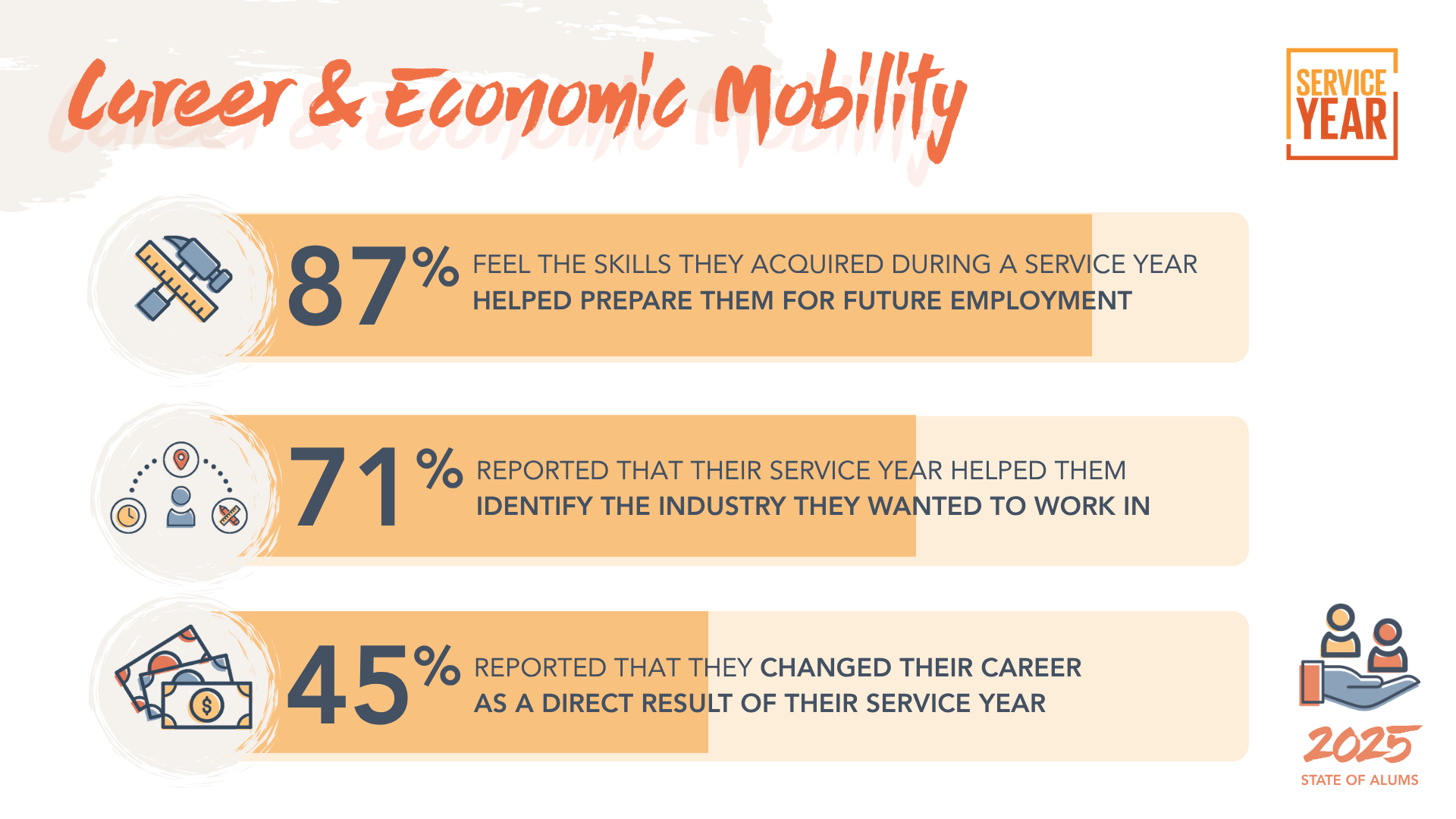
Participating in a service year has a powerful impact on young adults’ career trajectories, offering both direction and momentum. Alums are more likely than their peers to find gainful employment within six months; and their salaries track closely with national averages over the long term. These findings reinforce that a service year is a strong foundation for economic progress.
Education Outcomes
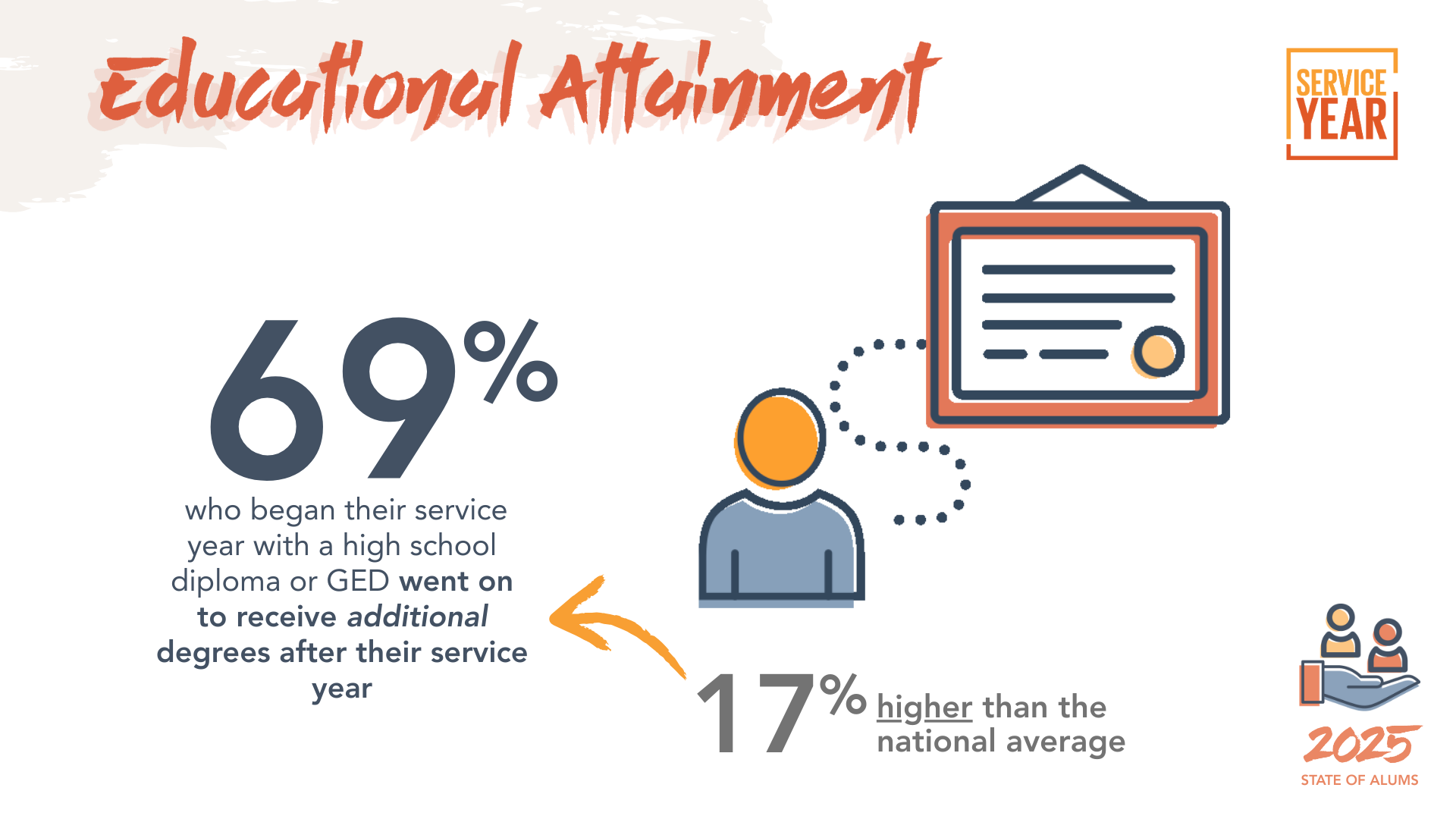
For many alums, particularly those entering service with fewer credentials, a service year offers a meaningful step in their education journey. Service years can open educational pathways that may have otherwise been out of reach, with many alums reporting that their service experience helped clarify their career direction and helped them pay for associated education costs.
Civic Engagement
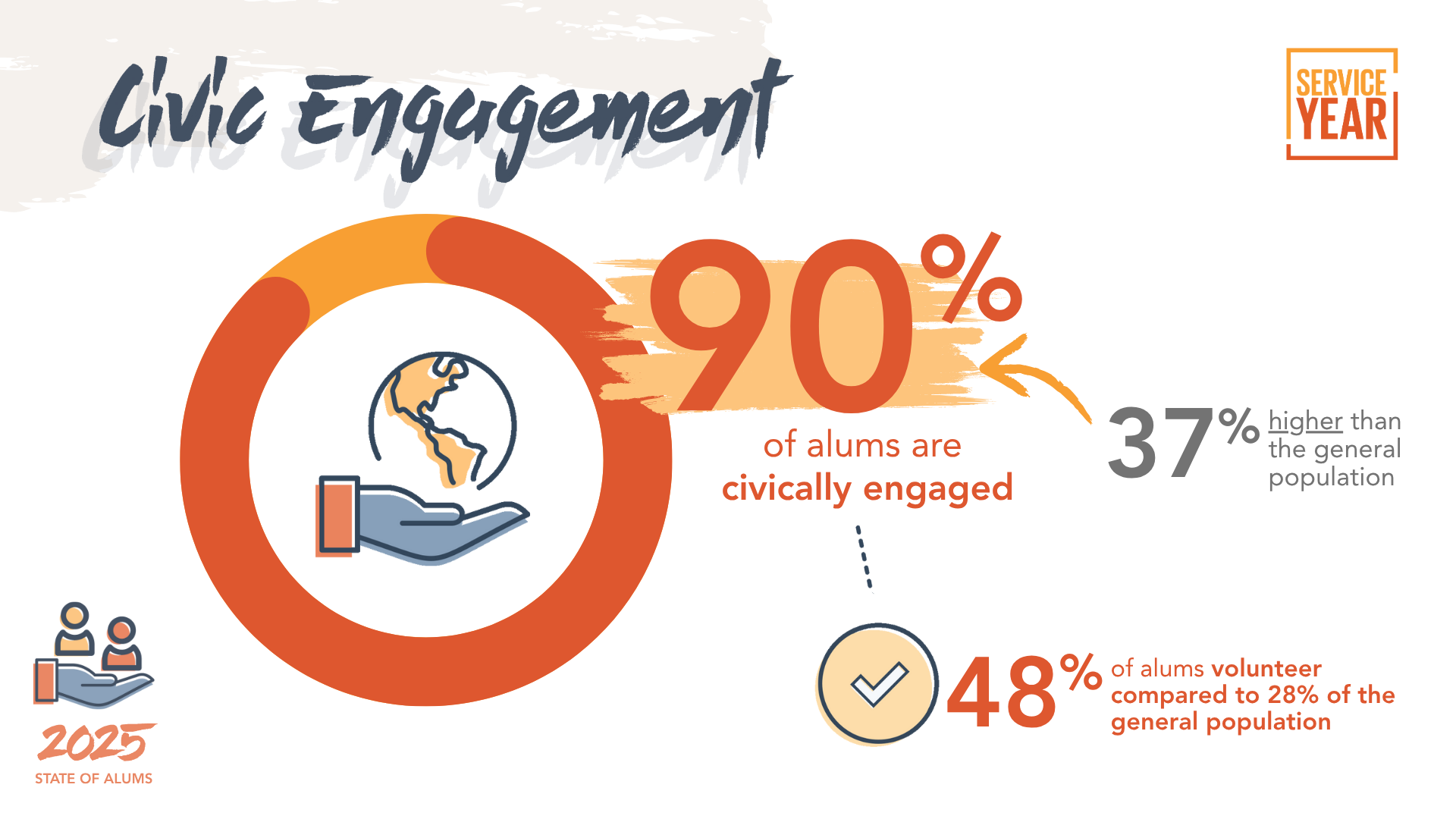
Service year alums demonstrate high levels of civic engagement and compelling evidence of a service year’s contribution to bridging divides and strengthening social cohesion. Additionally, linking back to the top skills acquired through a service year - adaptability, communication, and teamwork - we see that these are not only professionally transferable but closely tied to civic and community engagement. The results reinforce the dual impact of service years on workplace readiness and civic responsibility.
"Being able to work with AmeriCorps opened a ton of doors for me. I was able to obtain certification for my IT journey as well as gain job experience. I feel like if I was never given the opportunity to work with AmeriCorps, I don't know where I would be in life right now.”
Recommendations for the Service Year Community
A service year is more than a year of giving back - it’s a life-changing experience that catalyzes personal growth, professional success, economic mobility and civic responsibility. The quotes and statistics in this report should inspire deeper investment in a model that’s already working - and has the potential to do so much more.
This initial release of the findings from the 2025 Service Year Alums Survey has been specifically crafted to highlight data points that may be most relevant to state service commissions and service year program practitioners.
After reviewing the report, we encourage you to consider leveraging the data to assist you in advancing the following actions:
Expanding and Diversifying Funding
While community foundations, state and local workforce agencies, and regional commissions frequently invest in workforce development initiatives, service year programs have often underutilized these funding streams. The data in the report can help change that. By clearly demonstrating the role of national service as a proven pathway into the workforce, this evidence positions service year programming as high-impact workforce development strategy. With intentional outreach and alignment to local workforce priorities, service year stakeholders can make a compelling case for sustained investment from these under-tapped sources.
Educating State and Local Policy Makers on the Opportunity for Service to Help Address Teacher Shortages
Although the data shows that a service year can serve as an effective pathway into a variety of industries, there is clear opportunity for service years to be a solution to addressing teacher shortages that are present in nearly every state across the country. As many policymakers and their academic partners actively seek solutions to this problem, the data in this report can help them understand how investing in service year programming can be an effective strategy for building a strong bench of future educators.
Strengthening Partnerships with Post-Secondary Institutions
Post-secondary institutions have a strong incentive to partner with national service programs, especially when presented with the data demonstrating that a significant percentage of service year alumni pursue additional education following their service. The data included in the report also shows that many AmeriCorps alums carry unused Segal Education Award funds, which represents a substantial pool of potential tuition dollars to higher education partners. This combination presents a compelling argument for why colleges, universities, and trade schools should consider offering targeted benefits and resources - such as tuition discounts, priority admissions, or credit for service.
Strengthening Corps Member Recruitment Messaging
Service Year Alliance’s prior market research conducted in partnership with Data for Progress indicated that many young people feel that in order to participate in a service year, the experience must help them progress towards their professional goals. The data in this report can be leveraged to inform corps member recruitment campaigns and refine program design in ways that can help showcase how service is a powerful purpose-driven and paid career exploration opportunity for potential applicants to consider.
Elevating the Civic Impact of Service
In a time of increasing polarization, service years foster understanding, build bridges, and strengthen democracy. Centering the data from the report as part of public policy efforts, public messaging, and fundraising communications can help build awareness of service as an effective tool for strengthening civic democracy and uniting communities during these tumultuous times.
“AmeriCorps was life changing for me, personally and professionally. It pushed me out of my comfort zone and I got to do truly impactful work all across the country. I now work for a food bank in my home state of North Carolina, and I would not have been prepared for my role had it not been for AmeriCorps.”
The Survey Design
The 2025 Service Year Alums Survey was conducted from February to March 2025. In total, 2,423 individuals from all states, plus Washington, D.C., and the U.S. Virgin Islands participated in the survey; nearly 2,000 responses were 100% complete. While this survey was made available to individuals across all types of service years, approximately 95% served in AmeriCorps programs. Half of all respondents completed more than one term of service; for most questions, respondents were asked to respond based on their first term of service.
- Most were between the ages of 25 and 44 (34% were 25-34, 22% were 35-44). 66% stated that they were between 18 and 24 when they completed their service year.
- Over half identified as female, and 25% declined to state a gender.
- 55% of respondents identified as White; 13% as Black or African American, 5% Asian or Asian American, 2% American Indian or Alaska Native. Less than 1% identified as Native Hawaiian or other Pacific Islander, 25% declined to state their race, and 4% self described. Additionally, 11% identified as Hispanic, Latino, or Spanish Origin.
- All service year issue areas were represented, though nearly half indicated they served within the focus area of education.
“It’s clear from our data that service years are a high‑impact, scalable strategy for workforce development, education access, and civic renewal. Service years are good for Americans and good for America. It’s time to treat service years as a national priority and opportunity for all.” - Kristen Bennett, CEO of Service Year Alliance.
Read the full press release about the survey and report on our website.
Connect With Us
Service Year Alliance is committed to doing all we can to foster and support the service year alums community.
Chat With Our Team: Send us an email to learn more about the report, request a presentation on key findings, or ask us a question.
Get Involved: Explore our alumni offerings and take the next step in your service journey or share opportunities with alums in your network.
Take the Survey: The Service Year Alums Survey will open for new responses in 2026. Check back soon for details.


